How to Budget for Christmas Without the January Regret
December has a way of quietly eating money. It's rarely one big purchase. It's the extra gift for a colleague, the third trip to the shop for the Christmas dinner, the last-minute delivery charge and the party outfit. Then January arrives with the bill.
A Christmas budget doesn't mean a smaller or less special Christmas. It means deciding in advance where the money goes, so you can enjoy December without the January regret. Here's a simple way to do it.
Step 1: Decide your total number first
Before you look at a single gift idea, decide what you can afford to spend on Christmas in total. Look at what's in your account, what's coming in before Christmas and what bills are due. The number you can spend without borrowing or touching your emergency savings is your Christmas budget.
If last year's Christmas went on a credit card, start with a number a little lower than last year's spending. That alone makes a big difference.
Step 2: Split it into categories
Most Christmas spending falls into six groups:
- Gifts
- Food and drink (the main meal, parties, extra treats)
- Decorations
- Cards and postage
- Travel (fuel, train tickets, flights to family)
- Going out (work parties, outfits, events)
Give each category a share of your total. If gifts usually take most of the money, that's fine, but write it down so you can see it.
Step 3: Make a gift list with a number next to every name
This is the step that saves the most money. List every person you're buying for, then put a spending limit next to each name before you shop. Add a column for what you actually spent.
A few ideas that keep the gift list under control:
- Suggest a Secret Santa for big families or friend groups instead of everyone buying for everyone. Our Secret Santa rules guide explains how to set one up.
- Agree a limit with other adults. Most people are relieved when someone suggests it.
- Group gifts for couples and households.
- Make or bake for neighbours and colleagues.
Step 4: Plan the big meal like a project
Write your menu, then build the shopping list from it. Check what you already have, and split the shopping into non-perishables (buy early, when prices are normal) and fresh food (the last few days). A cooking timeline for the day itself stops panic purchases at 4pm on Christmas Eve.
Step 5: Track as you go
Every time you buy something for Christmas, write it down straight away. A quick look at the "spent" column every few days tells you if you're on track, and lets you move money between categories before it's too late.
Step 6: Start a Christmas sinking fund for next year
The easiest Christmas to afford is one you've been saving for since January. Divide next year's Christmas budget by the number of months left and set that amount aside each month. A sinking fund for Christmas, birthdays and car repairs means those costs stop being surprises.
Bonus: a no-spend week in January
If December went over, a short no-spend challenge in January helps reset quickly: only essentials for a week or two, and anything else you want goes on a wish list you revisit after 30 days.
Tools that make this easier
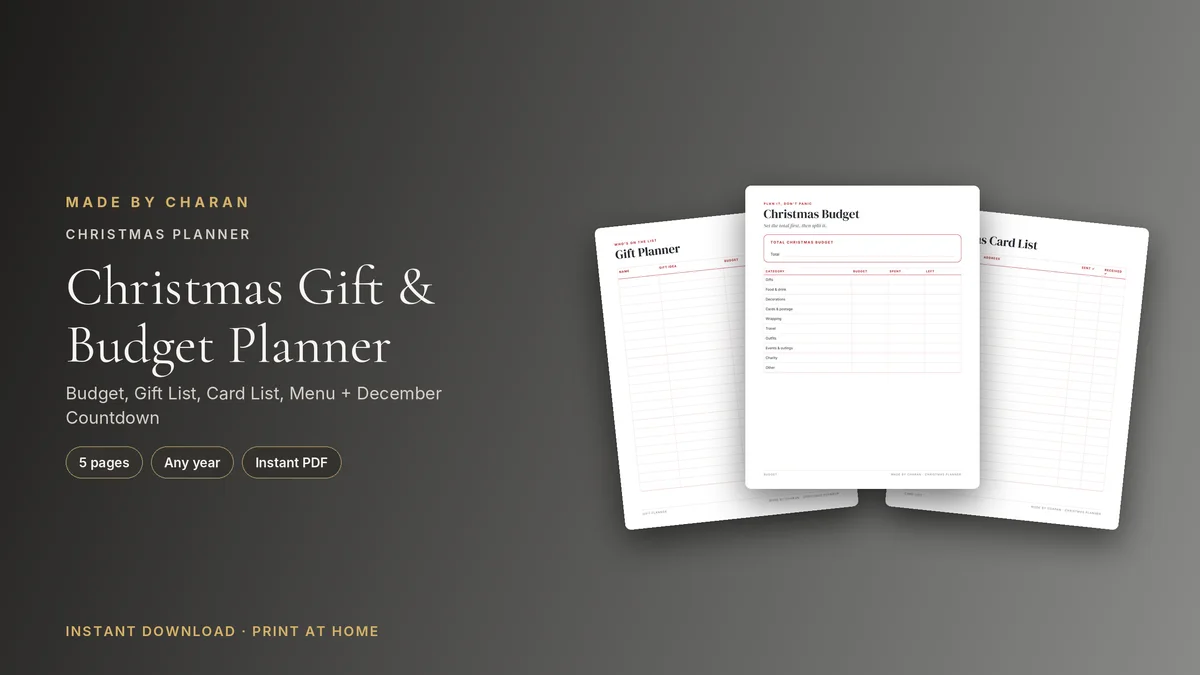
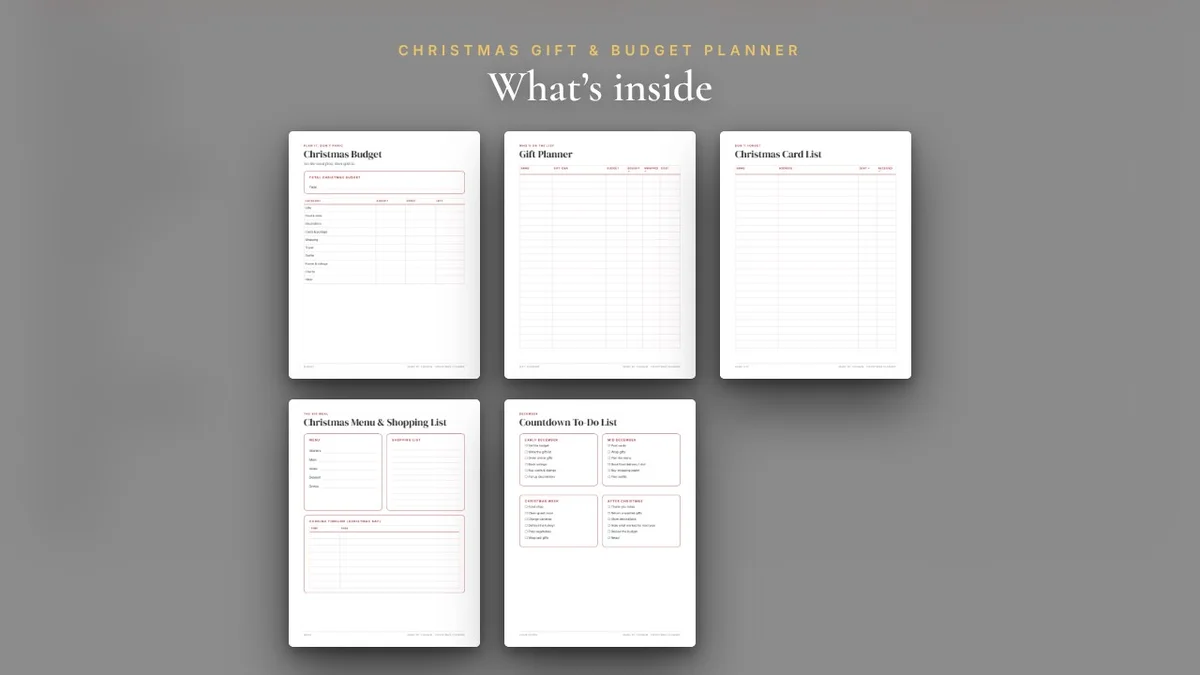
- The Christmas Gift & Budget Planner puts all of this on five printable pages: Christmas budget, gift planner, card list, menu with shopping list and cooking timeline, and a December countdown. It's undated, so you can use it every year.
- The Sinking Funds Tracker Spreadsheet works out how much to save each month for next Christmas and up to 14 other goals, in Excel or Google Sheets.
- The No-Spend Challenge gives you a 30-day tracker, a rules sheet and a wish list for a January reset.
Christmas budget FAQ
How much should I spend on Christmas?
There's no right number. Spend only what you have without borrowing or using your emergency savings, and decide the total before you start shopping.
How do I budget for Christmas on a low income?
Start with the total you can afford, cut the gift list with a Secret Santa or a family spending limit, and put food first. Small, thoughtful gifts are remembered more than expensive ones.
When should I start saving for Christmas?
As early as possible. Saving a small amount each month from January makes December much easier than finding it all at once.
What's the biggest Christmas budget mistake?
Buying gifts before setting a limit per person. Writing a number next to every name before you shop is the single most useful step.